Thursday, September 6, 2012

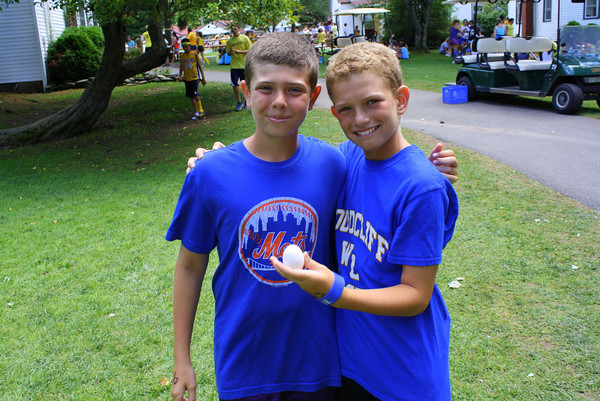
School has Started - Stay in Touch with Your Camp Friends


Staying in Touch…...All Year Long!

The school year has officially started!  The sunscreen and bathing suits have been replaced with backpacks and school supplies, and campers are back to being students once again. 

The start of the school year is often filled with mixed emotions.  There is the excitement of getting ready to enter a new grade, shop for the items on our back to school supply list, meet new teachers, get reacquainted with school friends, and prepare for the academic and social opportunities the school year has to offer.   But it also can bring a sense of longing for days at camp and the friends we made.  Camp friends are friends for life. They are the friends that know our dreams, our strengths, our shortcomings, and through it all love us unconditionally.  School may signify a time to move on from our summer routine, but we can never move on from our camp friends and the bonds we created. 

So how do we stay in touch with friends that are not part of our day to day interactions, especially when schedules are jam packed with school work and extracurricular activities???

Thanks to the wonders of modern technology, we can easily keep in contact with friends around the corner or across the country.  For young people with a cell phone or internet access, it’s as simple as sending a text or email.  There is also Facebook, Skype or video conferencing to catch up on all the happenings of the school year and to reminisce about days at camp.  In addition to seeing friends online, try to plan an actual face to face get together with friends that live nearby, or attend the reunion your camp organizes.  Reunions are a great way to bring summer memories back to life no matter what the season.  For younger campers who may not have an email address or internet access, encourage them to go the “old fashion” route and pick up the phone or write a letter (with an actual stamp on it to be delivered by the postal service).  There is nothing better than hearing a friend’s voice or opening the mailbox and receiving a hand written letter from a friend.   
     
But no matter how you stay in touch, remember to keep close contact with your camp friends until the summer rolls around again.  It will be here before you know it and we can’t wait.

Have a happy and easy start to the school year.

Friday, August 17, 2012

Back to School Is Almost Here


It’s hard to believe it’s late August and the end of summer is quickly approaching.  By now you have most likely unpacked your camper’s bags (done endless amounts of laundry) and have everyone settled into life at home and the family routine. But don’t get too relaxed…because the new school year is just around the corner and it’s time to start the transition from summer to fall.  Saying goodbye to summer is never easy, and the last couple of weeks can be chaotic as we try to make sure everyone is ready for the first day of school.  Most of us have spent the last couple of months with less on our plates.  We have had a break from homework assignments, extracurricular activities and the running around that the school year brings.  So how do we help our children (and ourselves) make the transition from summer mode to school mode as easy as possible?
The following tips may help…

1.      Re-establish Bedtime Routines:  If you have been edging toward a later bedtime during the long days of summer, begin to set up a good bedtime routine for the school year.  Sleep is an essential part of school success, so try to get your child’s sleep patterns back to normal the week leading up to school.

2.     Get Back To Breakfast:  A healthy breakfast will give kids the energy they need to learn.  According to many experts, eating a low-fat, low-sugar, high protein breakfast can have a beneficial influence on school performance. 

3.     Designate A Space To Do Homework:  Establish a routine and an area for your student to do their homework.  An older student can choose to do their work at a desk in their room, while younger children may need a spot at the kitchen table so that you can provide guidance when needed.  What matters most is that they have a place they can use regularly to complete their work. 

4.     Stock Up On School Supplies:  Take your school supply list to the local Target (or wherever you shop) and stock up on required supplies so that your child is prepared for the first day of school.  Have your child join you and pick out some things off the list so they get excited about returning to school with their choice of backpack or favorite character on their notebooks.

5.     Read…Read…Read:  Visit your local library and get your kids’ minds active and ready for learning.  Read some books together, it’s an excellent way to spend time together and refresh reading skills. 

6.     Plan Ahead:  Write down important information for your child to help them remember teachers’ names, room numbers, class schedules and bus numbers.  For children entering Kindergarten or moving up to a new school, it will help them feel more at ease if they are familiar with their surroundings.

7.     Mark It Down:  Use a calendar to record when assignments are due, tests are scheduled, and extracurricular practices and rehearsals will be held.  Keep one calendar for all events so you could see if you are getting overbooked. 

8.     Reunite with Friends:  If your child has been away at summer camp, plan a get together with school friends to help get reacquainted with their buddies. 

9.     Anticipate and Address Anxiety:  Going back to school can be stressful for kids of all ages, so head off stress by talking with your children about new experiences.  Be positive and confident in their abilities to take on new challenges. 

1.  Reflect:  Most importantly, reflect on the highlights of the summer and how amazing it was.  Talk about the wonderful times at camp, or on vacation, and how great it’s going to be to get back to it all again in summer 2013.  

 So enjoy the last few weeks of summer and we hope the transition to school life is as smooth as possible.  Have a great school year!!!    

Saturday, August 11, 2012

Parents - What to expect "post-camp"


For many parents the send off (to camp) requires enough emotional and logistical effort that there is no time to think about where all this work might lead. So allow me to give you some idea of what to expect on the other end of the calendar when your child returns from camp. It just might help…….to have a "big picture" reminder of what this endeavor is all about.

Expect your child to be tired.  Not just physically tired, but emotionally tired. You see, camp in its best form engages children not just in activities, but as active members of a community.  What does this mean? Your child is about to acquire several "brothers" or "sisters" they will then have to share everything with—personal space; the counselor's attention; time; fun; laughter; decision-making; clean-up (yes, chores!); some of their own personal possessions; and each other's friends. This requires a level of negotiating and give-and-take that most children do not experience in any place but camp!

This experience alone pays dividends. I have parents who have told me their child was so much more cooperative at home after camp.  Or that they got along better with their siblings after camp.  Or that they now eat a broader range of foods or keep their room clean.  Perhaps the most common comment I hear is that their children seem somehow calmer after coming home from camp, which almost seems puzzling to some parents. Where does this calm come from? Once you have the knowledge that you can successfully handle yourself—that you can negotiate with your peers and hold your own and compromise and find out it's just fine—it gives you a sense of confidence that is, well, just calming.

Your child may also be a bit sad after camp. If camp is anything, it is intense. Many children make some of their best friends at camp.  Leaving that rich social environment where you learn you can do things of which you never thought you were capable imparts a temporary emptiness. I call it the August blues. Oh, after a good sleep and a nice dinner (and a few electronics), they'll perk up.  My advice to you as a parent is, keep that first day or two after camp a bit low key. Have it be a time of family reunion. The stories and the songs and the sayings and the new wisdom will gradually come out, and as they do, it is as if your child will suddenly realize all that she has brought home from her camp experience.

And as they reminisce, you may find yourself surprised at the mature young person you are listening to, asking yourself, as many parents have told me they ask themselves: "When did she get so grown up?!" At camp, of course!

Bob Ditter, L.C.S.W  is a child, adolescent, and family therapist in Boston, Massachusetts.

Saturday, June 30, 2012

Should I Be Sending My Children To Summer Camp


Some six million children in the United States are preparing psychologically to go away to sleepaway camp. Whether these departing children are camp veterans or nervous rookies, they are mentally rehearsing being away from mom and dad, their comfortable beds, their pets, favorite meals and, of course, their beloved iPhones, Facebook and video games.
During the winter their parents made the decision -- and found the money -- to make it possible for their kids to leave their families and their comfortable homes so that they could spend a week or two or four in a rustic, more-or-less uncomfortable cabin getting bitten by mosquitoes. They will live with a bunch of other kids, some of whom are fantastic, others quite annoying. They will eat a balanced diet of grilled cheese sandwiches and Fudgesicles with the occasional corn dog for good measure. They will play fun but aimless games like "Capture the Flag" and sit around campfires watching hilarious, dumb skits that almost no one remembers two days later (except the authors, of course). They will master skills such as archery and kayaking, horseback riding and waterskiing, none of which will impress their varsity coach or their AP Bio teacher when they return to school.
While the campers are messing about in the woods, many of their peers will be attending summer school or specialized skills programs. Their responsible, if sometimes Tiger-ish, moms and dads will be investing their money in their children's future differently, sending them to one-week soccer and lacrosse programs, SAT prep courses and unpaid internships designed to polish skills, boost scores and impress college admissions officers. Instead of spending three weeks at an all-around camp, these children will be focused on skill-building, sometimes in three different specialized programs to which their parents drive them every day (allowing time for that all-important debrief in the car going home).
Which set of parents has it right? Or more to the point: Does an overnight camp experience still make sense in this competitive, resume-building world? From this psychologist's point of view, the answer is a resounding YES. I believe that children develop in profound ways when they leave their parents' house and join a camp community.
Learning to sleep away from home is, of course, a critical step on the way to independence. Part of the challenge is beating homesickness, which may be hard for some children, and which, by definition, your parents cannot help you do. Kids know they have to do this sooner or later. As my son once remarked with horror, "If you can't learn to sleep away from home, you have to live with your parents for the rest of your life." But beyond that, there are things that, as a parent, you cannot do for your children, as much as you might wish to. You cannot make them happy (if you try too hard they become whiners); you cannot give them self-esteem and confidence (those come from their own accomplishments); you cannot pick friends for them and micro-manage their social lives, and finally you cannot give them independence. The only way children can grow into independence is to have their parents open the door and let them walk out. That's what makes camp such a life-changing experience for children.
After conducting hundreds of interviews of campers and former campers for my book, "Homesick and Happy: How Time Away from Parents Can Help a Child Grow," I know that many young people do not really know how strong they are, how competent they are or even who they are until they get away from their parents and test themselves in a new and challenging environment. Many children told me the best thing about camp was, "I can really be myself here." What do they mean by that? I am pretty sure I know the answer. When children are away from their parents, they do not have to view their own life and achievements through the lens of my-athlete-father-standing-on-the-sidelines-watching-me or my-mother-is-worried-that-I'll fail. When a child is on his own, the experience is his alone, the satisfaction belongs only to him and he does not have to filter it through what his parents think and feel.
For the dedicated, loving and anxious parent, letting a child go can be tough. "Will she be happy at camp? Will he make friends? Will she be homesick?" But homesickness can often be confused with a parent's childsickness. The director of a girls' camp in Massachusetts tells me she has more and more parents of 9-year-olds calling to say, "Well, she's ready for camp, but I'm not ready to have her leave." If you want an independent child, you have to master your own childsickness. Try remembering the sweetest moments from your own childhood. Most adults tell me that the sweetest, most memorable times of their childhood were when they were away from their parents, doing something with friends in the out-of-doors, taking a challenge or doing something a bit risky. That sounds like camp to me.
By the way, when I interviewed college admissions officers about how they view campers, they say that they think former campers are more likely to succeed in college because they have had successful experiences away from home, and they are always impressed by seniors who have been counselors looking after younger children. Camp helps build confidence and identity; it also builds leadership skills.
By:  Michael Thompson, Ph.D - Author "Homesick and Happy"

Wednesday, June 20, 2012

The Incredible Power of the Camp Counselor


Campers get ready….you are about to meet some very important people this summer.  No, we are not talking about the friends you will meet at camp…we are talking about the people who will teach and inspire you for the next 3-6 weeks… we are talking about your Camp Counselors.  These are the folks that will make a lasting imprint on your life and your summer memories.  The folks you will recall with a smile on your face and a warm place in your heart. 

Many college students choose to work at summer camp to build skills in communication, team work, problem solving and overall responsibility.  But they walk away with so much more than life skills to put on a resume.  Camp counselors quickly realize the positive impact they have made in the lives of their campers.  This impact is often measured in hugs, laughter, endearing words, and tears when the last day of camp arrives.  Research points out that young people themselves rank counselors as some of the most influential people in their lives.   Camp counselors are leaders, teachers, role models, mentors, confidants, cheerleaders, and occasionally comedians.  Many counselors have been campers themselves and know how great it can be to have a “summer parent” and friend to help you through being homesick, conquering your fears, trying new things, resolving conflicts, and just being yourself. 

Camps provide extensive training for staff to ensure that counselors are properly prepared to supervise campers and adhere to camp policies and procedures.  But after all the training and guidance, the day to day camp life brings out a true leader and person who enriches lives and creates a camp environment that brings campers back year after year.  There are few life moments as rewarding as being involved in a campers accomplishments, watching them challenge themselves, have fun, and feel so well taken care of and loved, away from their family and home.  Counselors help establish that “home away from home” comfort and bring the warmth that is camp.  If you have been a camper, I’m sure you have a few special counselors you remember to this day, with memories that can still make you laugh or remind you how they much they impacted who you are today.  A "Y" camp counselor quote on the YMCA.net website states it well… “If you somehow positively impact one child and they get a sense of self and confidence and even just happiness, and they bring it back to their family, and their school, camp can affect millions of people”.


So when you get to camp and begin experiencing summer 2012…enjoy every minute.  Enjoy your friends, the activities, the fun, and most importantly enjoy your counselors.  You will remember them for years to come.

Tuesday, June 12, 2012

Swimming Season is Here!


A few weeks ago we celebrated Memorial Day and remembered those who have died to protect our freedom.  But Memorial Day has also come to signify the start of summer, celebrated with cookouts, family get-togethers and our entry back to the water.  Be it the beach, backyard pool, local lake, or community pool club, swimming is in for the season.  As pools, beaches and camps open, the importance of water safety and learning to swim comes into focus. 

The American Red Cross website has an extensive list of water safety tips to keep your family safe this summer.  Here a just a few to help ensure everyone has a safe and fun summer in the water.
-        Learn to swim.  The best thing anyone can do to stay safe in and around water is to learn to swim. 
-        Know before you go.  Don’t swim if you don’t know if it’s safe. 
-        Wear a coast guard approved life jacket if you are unfamiliar with the area.
-        Always closely supervise children whenever they are near any body of water. 
-         Swim with a buddy in a designated area that is supervised by lifeguards.
-        Pay attention to local weather conditions and forecasts.  Stop swimming at the first indication of bad weather.
-        Enroll in Red Cross water safety, first aid, and CPR courses to learn how to respond in an emergency.

At Camp Iroquois Springs, we only hire American Red Cross trained and certified lifeguards and swim instructors for our Aquatics program.  We follow their program and procedures, along with the New York State Department of Health, to ensure that everyone feels safe and comfortable in and around the water.  We know that the aquatics program is a highlight of the camp experience.  Our campers love swimming in our Olympic size pools, playing on the aqua playground, water skiing, wake and knee boarding, tubing, kayaking, and so much more.  In addition to the Red Cross swimming and water safety program, we require that all campers wear life jackets when participating in water sports on the lake, always swim with a buddy, and conduct routine buddy checks during swim periods.

All campers up to 7th grade participate in swim lessons and are given the skills to enjoy their time in the water.  Taking part in swimming and water sports is not only fun, but offers many health benefits.  Swimming keeps your heart and lungs healthy, improves strength and flexibility, increases stamina and even improves balance and posture.  Swimming gives children more opportunity to make friends and gain confidence.  It opens the door to countless other sports and activities, and is a skill to have for a lifetime.   

So as the temperatures start to soar and you head to the beach, a trip at the lake, or off to camp, enjoy a happy and safe summer in the water.  We know we will! 

Monday, June 4, 2012

The Value of the Summer Camp Experience


If you have ever wondered about the power of the summer camp experience and the lasting memories that it brings, than I urge you to read on.   I would like to tell you about my mother, Karen, who will be turning 70 years old in a few short weeks.  Sixty years ago in 1952, my mother became a camper.  For as long as I can remember I have been hearing stories about her summer camp experience and how much camp meant to her.  So I decided to sit down and “interview” her to find out more about how sleep away camp shaped who she is today.  I have to admit, it was an eye opening moment for me.  I of course knew that she absolutely loved camp, but I had no idea of the details she still remembers and the joy this conversation brought to her.  Here is a bit of her experience….

My mom attended Camp Sherwood, in Hurleyville NY, from 1952 to 1956.  Sending your child to overnight camp in the 1950’s was not as common as it is today, but my grandparents saved their pennies and came up with the $500 it cost for 8 weeks, so that my mom could have this opportunity.  That very first summer when she was 10 years old, she experienced a great deal of homesickness at first, but she quickly adjusted to camp life and all it had to offer.  When she returned her second summer, the camp had just built new cabins.  My mom remembers how beautiful the cabins were and even recalls how great the new wood smell was.  She remembers the names of her bunkmates (first and last), her counselors, and even the owner.  The owner’s mother was the camp cook and prepared all the meals (with some assistance I hope).  Dinners consisted of steak, lamb chops and roast beef, not exactly the kid friendly food of today, but my mom said the meals were fabulous.     Camp is where my mother learned to swim, save someone in a sinking canoe, and play tennis.  She went on hikes, sang in the talent show (Tony Bennett’s “Because of You”) and acted in camp plays (including Carousel, Oklahoma and Finnegan’s Rainbow).  She participated in Color War (go Green and Blue), went to Friday night services, and got all dressed up for Saturday night socials.  Visiting day was a whole different world.  At Camp Sherwood, there was no specific visiting day scheduled for parents.  Parents could visit their campers any time they wanted.  There were even overnight accommodations at camp for parents who wanted to stay over.  My grandparents spent every weekend visiting my mother at camp. There was no thruway back then, so they sat in plenty of traffic on the back roads in order to see my mom.  She remembers feeling strange when camp was over and she returned home.  It felt like a part of her was missing without her camp friends around her.  The most amazing part to me is that my mom stills keeps in touch with a couple of these friends…and that says it all.

A few years ago, on one of their journeys to the Catskill area, my parents decided to look for Camp Sherwood.  They knew it was no longer in operation, but they thought they could take a look around.  The property was boarded up, so the closest they got was to look through the trees at the old buildings.  My mom would have trespassed and gotten a closer look, but my dad being a rules follower, thought they should look from afar (remember, he was not the camper in this scenario).

So if you are thinking about sending your children to overnight camp or already do, but wonder how long the memories will last, I can assure you that my mom ‘s story says it all.  Camp is a place to be with friends and “family”, to learn, to grow and to build wonderful memories that clearly last a lifetime.